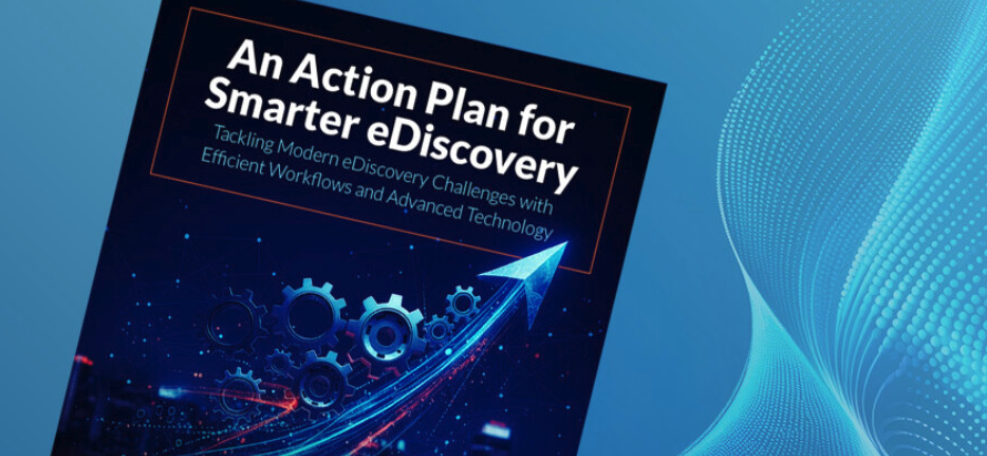
Tackling Modern eDiscovery Challenges with Efficient Workflows and Advanced Technology
In today’s data-driven enterprise environment, the pace and complexity of investigations are accelerating. Legal teams must manage growing volumes of data across collaboration platforms, cloud repositories, mobile devices, and enterprise systems, often under tight legal deadlines and increasing regulatory scrutiny. Traditional eDiscovery processes built around manual workflows and fragmented tools are no longer sufficient to keep pace.
This whitepaper, An Action Plan for Smarter eDiscovery, explores how modern legal and compliance teams can rethink discovery workflows to operate with greater speed, precision, and defensibility. By combining improved information governance practices with automation and artificial intelligence, organizations can transform how they identify, preserve, collect, and review digital evidence.
The guide introduces a practical six-step framework that covers the key stages of the eDiscovery lifecycle, including information governance, legal hold and preservation, early case assessment, targeted data collection, document review, and discovery project management. Each stage includes practical checklists and operational guidance designed to help legal teams move from reactive discovery processes toward a more proactive and structured approach.
A major focus of the whitepaper is the role of AI and advanced analytics in modern discovery workflows. From accelerating early case assessment to reducing document review volumes and improving investigative insight, AI-powered capabilities can help legal teams surface relevant information faster while maintaining defensible processes and human oversight. When applied strategically, these technologies enable organizations to reduce unnecessary data collection, control discovery costs, and improve decision-making throughout the lifecycle of a matter.
The whitepaper also highlights how smarter eDiscovery workflows can support a broader range of data-intensive legal and compliance scenarios beyond traditional litigation. These include internal investigations, regulatory inquiries, subpoena responses, and privacy-related requests such as Data Subject Access Requests (DSARs). In each of these contexts, organizations face the same core challenge: identifying and analysing relevant information quickly while minimizing legal and operational risk.
By implementing more integrated workflows, establishing stronger collaboration between legal, IT, compliance, and records management teams, and leveraging automation where appropriate, organizations can build a more resilient and scalable discovery strategy.
Ultimately, smarter eDiscovery is not only about technology, it is about creating repeatable, defensible processes that allow legal teams to respond to complex matters with greater confidence and efficiency.